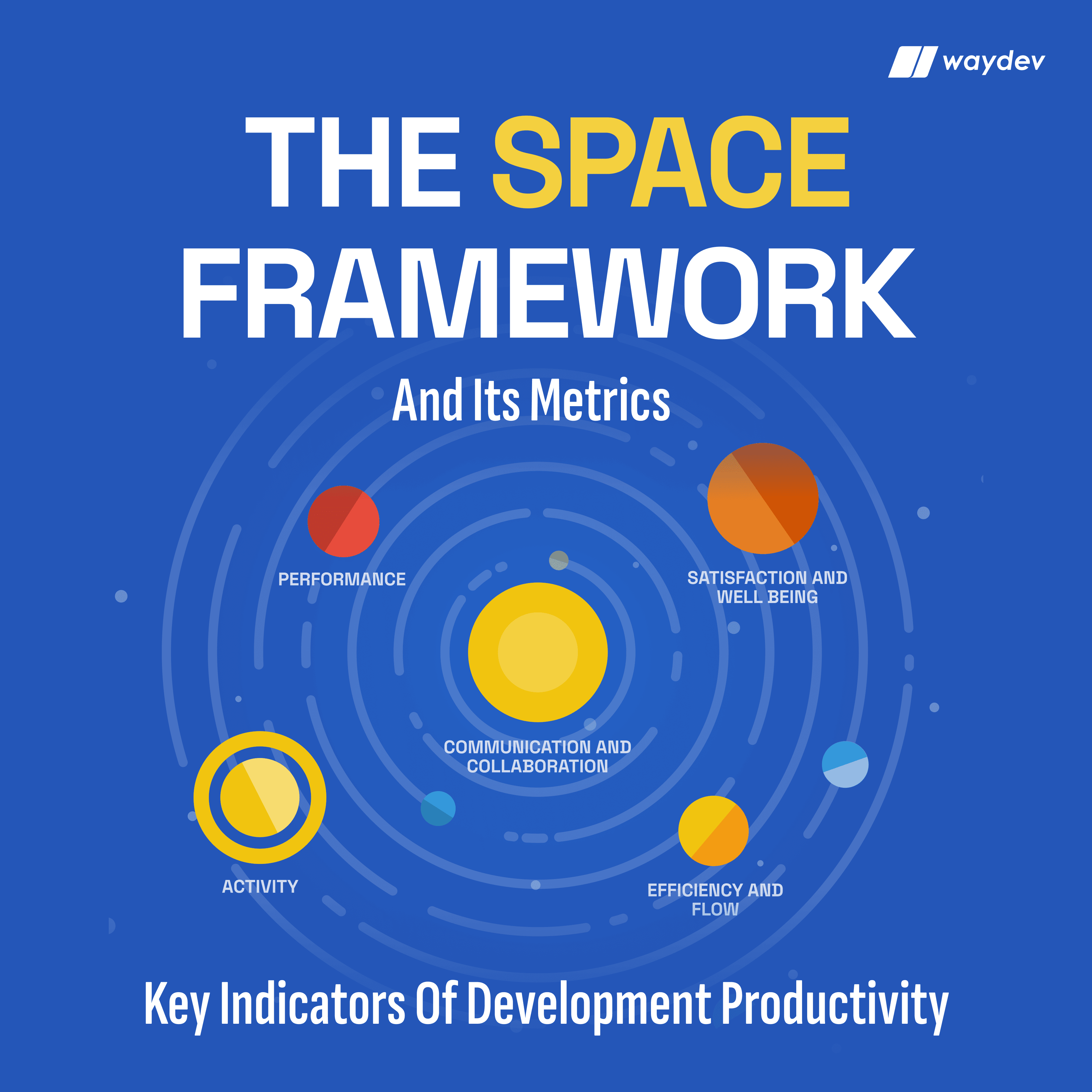
Every engineering organization bought AI tools. Almost none can prove what they got. That is the gap this playbook closes. Today it joins the DORA Metrics Playbook, the SPACE Framework Playbook, and the Cycle Time Playbook in our library, and it is the one built for the question every board is asking right now.
The question changed
In 2024 the question was whether to adopt AI coding tools. In 2025 it was how fast. In 2026 the question changed. Boards and CFOs now ask a harder one: what did we get?
Most engineering leaders cannot answer. Not because AI is failing. Because nobody instrumented the system it runs inside. License counts get reported as adoption. Vendor dashboards get reported as impact. Anecdotes get reported as ROI. Meanwhile the actual signal sits untouched in Git history, pull requests, reviews, and delivery pipelines.
Organizations know what they pay for AI. They do not know what AI does to delivery speed, code quality, or team economics. The distance between those two facts is where budgets die.
We work with Fortune 500 engineering organizations every day. We have watched this exact conversation play out in budget meetings across the industry. The leaders who show up with vendor screenshots lose. The leaders who show up with their own delivery data win. This playbook is everything we have learned about becoming the second kind.
2nd
largest engineering budget line after headcount
6-10x
variance in AI impact between teams in the same org
90 days
from zero to a defensible, board-ready ROI readout
What’s inside
The playbook is built around a simple thesis: you are not measuring a tool. You are measuring a delivery system that a tool changed. Everything follows from that.
Six problems that compound
Adoption without visibility, activity inflation, quality drift, ROI theater, team-level blindness, and the trust gap. Each one makes the others worse, and the loop only spins one direction on its own.
Five metrics that tell you whether AI is working
True adoption rate, AI-assisted delivery share, quality delta, cycle time impact, and ROI per team. Together they form a complete chain from spend to outcome. Remove any one and the chain breaks.
An operating model, not a dashboard
Baselines, per-team goals, automated signals that tap you on the shoulder in Slack, privacy-safe roles and anonymization, and a review cadence that runs weekly, monthly, and quarterly.
What you’re up against
Vendor-reported metrics, Goodhart’s law, privacy pushback, fragmented data, and executive impatience. Every failure mode is predictable, and every one has a counter.
The 90-day plan
Baseline by day 30. Goals and signals by day 60. A board-ready ROI readout by day 90. Each phase has a hard deliverable.
What’s deliberately missing
No rankings. No lines of code. No acceptance rates.
Individual surveillance destroys the trust you need for adoption. Editor-level stats do not survive contact with a CFO. Measure teams and systems. Coach individuals privately. This principle runs through the entire playbook, and it is the reason measurement programs built this way actually get adopted instead of fought.
The plan
Days 0-30
Baseline
Connect Git, review, and PM data. Compute 90 days of history per team. Publish the privacy policy. Deliverable: a signed-off baseline per team.
Days 31-60
Goals + Signals
Set per-team targets. Stand up automated signals in Slack. Start the weekly 15-minute review. Deliverable: goals live, first trend lines.
Days 61-90
The ROI Readout
Compute ROI per team. Build the board narrative. Set next quarter’s targets. Deliverable: a readout the CFO can take to the board unedited.
Why “compounds”
Measurement is not a report you produce. It is a capability you build. The org that starts today is not 90 days ahead of the org that starts next year. It is a full generation of decisions ahead: license allocations, process fixes, enablement bets, and vendor negotiations, all made with data instead of instinct.
There is also a closing window. Baselines are only possible before behavior fully shifts. Every month of unmeasured AI adoption is pre-AI comparison data you lose forever. The best time to instrument was before rollout. The second best time is now.
Ready to prove what AI delivered?
Get the Impact That Compounds Playbook
Written for VPs of Engineering, CTOs, and platform leaders who own the AI budget.
It does not assume a data team. Free.
or Request a Demo to see your own baseline in days, not quarters
Alex Circei is the CEO and Co-Founder of Waydev, the AI engineering intelligence platform trusted by Fortune 500 companies. Waydev has been building Git-first engineering analytics since 2017 and holds a USPTO patent in Git analytics.
Ready to unlock your SDLC productivity?