If you are evaluating Allstacks, you are choosing between two credible platforms with genuinely different philosophies. Allstacks is a value stream intelligence platform built around ML forecasting and delivery risk. Waydev is an AI-native engineering intelligence platform built around measuring what AI actually changed in your delivery, using a framework you keep whether or not you keep us. This page lays out the differences, including where Allstacks is the better choice.
| Waydev | Allstacks | |
|---|---|---|
| Core positioning | AI-native engineering intelligence. Measuring AI adoption, impact and ROI alongside delivery and cost. | Value stream intelligence. ML-based delivery forecasting and risk detection across the SDLC. |
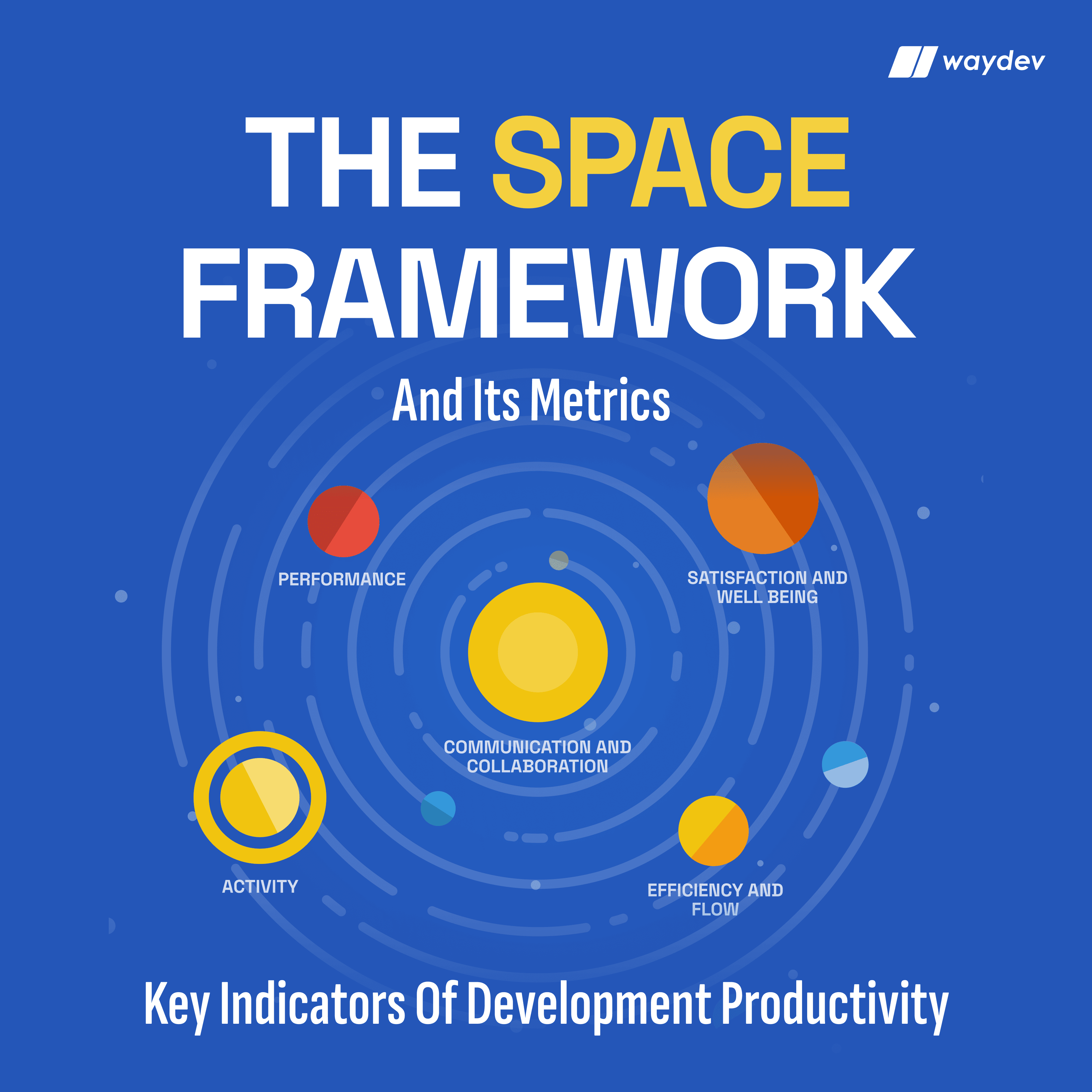
| Measurement framework | The WAY Framework. Combines DORA, SPACE and Core 4 rather than replacing them. No proprietary index you have to adopt. | Supports DORA, SPACE, Flow and SAFe, layered on its own context graph and intelligence engine. |
| AI coding tool coverage | Adoption, impact and ROI measured as three separate layers across Copilot, Cursor, Claude Code and Codex. | Added measurement of AI coding assistant delivery impact in 2026. |
| Pricing | Published. Per active contributor, unlimited users and teams on every plan. | Not published. Sales-led enterprise pricing. |
| Deployment | Cloud, self-hosted or on-premise, including on-premise Git and ticketing integrations. | Cloud platform, with support for connecting self-hosted tools. |
| Financial reporting | Cost capitalization, project costs, resource allocation and planning. | Cost capitalization and investment allocation. A long-standing strength of the platform. |
| Analyst position | G2 High Performer, Software Development Analytics. Highest User Adoption, Mid-Market. | Named a Visionary in the 2026 Gartner Magic Quadrant for Developer Productivity Insight Platforms. |
Allstacks details are drawn from its own public materials as of September 2026. Vendor capabilities change; verify current details with both vendors before deciding.
Difference 1
A framework you keep, not an index you rent
The engineering intelligence market spent the last year building proprietary frameworks: Core 4 and DXI at DX, DRIVE at Cortex, APEX at LinearB, WAVE at Uplevel. The pattern is the same each time. Adopt the vendor’s vocabulary, and the definitions live inside the vendor’s product.
The WAY Framework is deliberately the opposite. Work-first, Agnostic, Yours. It combines DORA, SPACE, Core 4 and the AI measurement research instead of competing with them, it computes from system data at the source, and the measurement language stays your property. If you leave Waydev, your targets, your board narrative and your managers’ vocabulary all still work. A framework you cannot take with you was never a framework.
Difference 2
AI adoption, impact and ROI kept as three separate measurements
Most platforms collapse AI measurement into one score. That is how organizations end up with token consumption leaderboards and a board deck that reports spend as productivity. We keep them apart on purpose.
AI Adoption covers seats, active and silent users, acceptance rate and the share of work with AI involvement across Copilot, Cursor, Claude Code and Codex. AI Impact covers what happened next: cycle time by stage, review load, rework rate, change failure rate. AI ROI puts changed delivery economics against tool and platform cost, in arithmetic your CFO can audit. Three claims, three answers, no composite hiding a weak one behind a strong one.
Difference 3
Published pricing, per active contributor
Allstacks does not publish pricing. Every evaluation starts with a sales conversation and ends with a quote you cannot benchmark. Our plans are on the site with numbers attached, billed per active contributor rather than per seat, with unlimited users and unlimited teams on every plan. You can model the cost before you talk to anyone, and you do not pay for people who did not commit code this month.
Difference 4
Deployment options for regulated environments
Waydev runs in the cloud, self-hosted, or fully on-premise, with on-premise Git and ticketing integrations, SAML single sign-on, and role-based access control down to team level. For banking, defence, healthcare and public sector buyers whose security review starts with where the data lives, that is usually the first question and sometimes the only one.
Difference 5
Your data, in the tools your teams already use
Our API pulls and pushes, so Waydev data can feed the board deck, the data warehouse or the internal developer portal you already run. Custom metrics let you write your own formulas, custom dashboards and reports let you build the exact view your organization needs, and Sonar code quality data sits alongside your Git and ticketing signals rather than in a separate tool.
If you looked at Waydev more than a few months ago, the platform has changed substantially. V2 is built for organizations where engineers increasingly supervise agents rather than write every line themselves.
Ask Waydev
Ask a question about your delivery in plain language and get an answer computed from your own data, with the numbers traceable back to the source. Not a chat tab bolted onto a dashboard.
Waydev MCP
Your engineering metrics available to the agents your teams already use, through the Model Context Protocol. The measurement layer becomes something an agent can query mid-task, not a site someone has to remember to visit.
AI Checkpoints
Structured checkpoints that tie AI-assisted work to what happened downstream, so a throughput gain is never reported without the quality signal beside it.
Signals and Snapshots
Signals surface what changed and why it matters without waiting for someone to open a report. Snapshots capture the state of your delivery at a point in time, which is what makes before-and-after comparison of an AI rollout possible at all.
Goals and AutoGoals
Set the outcome you are working toward and let Waydev propose realistic targets from your own history rather than from an industry average that does not describe your organization.
We would rather you pick correctly than pick us. Allstacks has been building since 2017, was named a Visionary in the 2026 Gartner Magic Quadrant for Developer Productivity Insight Platforms, and is genuinely strong in a few places.
Choose Allstacks if your primary problem is delivery forecasting. ML-based prediction of whether an initiative will land on time is what the platform was designed around, and it does that well.
Choose Allstacks if you need very broad connector coverage across an unusually fragmented toolchain. Their connector library is extensive.
Choose Allstacks if product management workflow is in scope. They have extended upstream into requirements and product definition, which is a different bet from ours.
Choose Waydev if your board is asking what the AI investment returned, if you need the answer computed from system data rather than surveys, if you want pricing you can model before a sales call, or if your security review requires on-premise deployment.
| Plan | Price | What is included |
|---|---|---|
| Pro | From $348 per year per active contributor | Delivery and Health reports, Targets, Notifications, role-based access control, custom dashboards. Up to 50 repositories and 6 months of history. |
| Premium | From $648 per year per active contributor | Delivery, Health, Planning, Automation, Studio and AI modules. Team-level permissions, SSO and SAML, API access. Up to 300 repositories and 36 months of history. |
| Enterprise | Custom | Everything in Premium plus on-premise Git and ticketing integrations, self-hosted or cloud-hosted, SAML SSO, dedicated engineering support and customer success. |
Unlimited users and unlimited teams on every plan. Allstacks does not publish pricing, so a like-for-like comparison requires a quote from them.
Step 1
Run a proof of concept on your own repositories
We connect to your Git, ticketing and CI systems and backfill history, so you are comparing platforms on your data rather than on a demo tenant. Nobody should buy a measurement product on someone else’s numbers.
Step 2
Rebuild your existing reports before you switch off the old tool
Custom metrics and custom dashboards let you reproduce the views your leadership already reads. Run both platforms in parallel for a cycle and check the numbers agree before anyone changes a board deck.
Step 3
Set the AI baseline while you still can
Baselines are only possible before behavior fully shifts. Every month of unmeasured AI adoption is pre-AI comparison data that no vendor can reconstruct for you later. If you are mid-rollout, this is the part to do first.
Is Waydev a direct replacement for Allstacks?
For delivery metrics, DORA, cycle time, planning, resource allocation and cost capitalization, yes. If ML delivery forecasting is the specific capability you bought Allstacks for, evaluate both on your own data rather than taking either vendor’s word for it.
Does Waydev measure AI coding tools other than Copilot?
Yes. Copilot, Cursor, Claude Code and Codex, with adoption, impact and ROI reported separately rather than merged into a single score.
Can Waydev run on-premise?
Yes, on the Enterprise plan, including on-premise Git and ticketing integrations, self-hosted or cloud-hosted, with SAML single sign-on.
How large an organization can Waydev handle?
The platform is built to scale past 10,000 active contributors and is in production at Fortune 500 organizations including American Express, Dropbox and PwC.
The short version
Allstacks predicts whether your delivery will land. Waydev tells you what your AI investment actually changed, in a framework you keep either way. If both questions matter, run a proof of concept on your own data and let the numbers decide.
See it on your own repositories
Book a proof of concept and we will connect your systems, backfill your history, and show you your own delivery and AI numbers. No obligation, and you keep the analysis either way.
Compare Waydev with: Jellyfish · LinearB · DX · Cortex · Swarmia · All comparisons
Further reading: The WAY Framework · DORA metrics · Measuring AI ROI in engineering · AI ROI calculator
Comparison accurate as of September 2026 and based on publicly available information about Allstacks. Gartner and Magic Quadrant are registered trademarks of Gartner, Inc. Gartner does not endorse any vendor, product or service depicted in its research. If anything here is out of date, tell us and we will correct it.
Ready to unlock your SDLC productivity?