Typo has grown up since this page was last written. It started as a lighter developer-experience and DORA tool and is now a full AI-native engineering intelligence platform: automated code review with auto-fix, its own measurement of AI coding tools like Cursor and Claude Code, delivery intelligence, and developer experience surveys, all connected to your stack in about a minute. That makes this a genuinely closer comparison than it used to be, and worth doing honestly.
The short version: Typo pairs analytics with automated action, including code review that fixes what it finds. Waydev pairs analytics with financial and planning depth, and a framework built to outlive any single vendor. If you want the platform to act on your pull requests, look hard at Typo. If you want your delivery numbers to sit next to cost capitalization and resource planning in the same view, that is what we built.
| Waydev | Typo | |
|---|---|---|
| Core positioning | AI-native engineering intelligence: delivery, cost, planning and AI ROI in one view. | Engineering intelligence paired with automated action on code and workflow. |
| Code review | Reports on review speed and thoroughness via Merge Quality. Does not review code itself. | Runs automated AI code review on every pull request, with auto-fix for issues it finds. |
| AI coding tool measurement | Adoption, impact and ROI kept as three separate layers across Copilot, Cursor, Claude Code and Codex. | Measures the impact of AI coding tools including Cursor and Claude Code on delivery speed and code quality. |
| Framework | WAY: combines DORA, SPACE and Core 4, owns no proprietary index. | DORA and delivery intelligence, evaluated by Gartner in its Market Guide for SEI Platforms. |
| Planning and finance | Cost capitalization, project costs, resource planning and allocation, in the core platform. | Monitors R&D investment allocation; check current depth directly for your finance use case. |
| Setup | POC-led, with history backfilled from day one. | Self-serve, stated setup time of about a minute, freemium tier available. |
| Deployment | Cloud, self-hosted or fully on-premise, including on-premise Git and ticketing. | Cloud. Ask about on-premise directly if it is a hard requirement for your evaluation. |
Typo details drawn from its public materials as of September 2026. Both products move quickly; verify current capabilities and pricing directly before deciding.
Analytics that act, not just report
Automated code review with auto-fix on every pull request is a genuinely different product shape from a dashboard. If review load is your bottleneck and you want the tool to close some of that gap directly, Typo is built for exactly that.
Fast time to first insight
A stated one-minute connection to GitHub, GitLab, Bitbucket, Jira, Linear and CI/CD tools, self-serve, with a free tier to try before committing. For a team that wants to be looking at data this afternoon, that is a real advantage over our POC-led model.
Established at scale
A stated base of more than 1,000 engineering teams and over 15 million pull requests processed, plus coverage in Gartner’s Market Guide for Software Engineering Intelligence Platforms. This is not an early-stage tool anymore.
Strip away the overlapping DORA and DevEx features, which both platforms now do reasonably, and two real differences remain.
Action versus depth. Typo’s bet is that engineering intelligence should act directly on the codebase: review, flag, auto-fix. Our bet is that the harder problem for most engineering leaders is not code review, it is connecting delivery data to cost, planning and AI ROI in a way a CFO can audit. Cost capitalization, project costs and resource allocation sit in the core platform rather than as a lighter add-on.
Self-serve versus guided. Typo wants you evaluating on your own within a minute. We would rather backfill your history and walk through what the numbers actually mean in a proof of concept, on the theory that a wrong first read of a delivery metric is worse than a slower start. Which approach you prefer says as much about how your organization buys software as it does about either product.
AI: AI Adoption, AI Impact and AI ROI as three separate measurements, plus the Waydev Agent for predicted outcomes.
Delivery: DORA metrics, cycle time by stage, pull request insights, merge quality, velocity and sprint commitment.
Health: Insights, benchmarking, hygiene, and Developer Experience surveys.
Planning and finance: Bird’s-Eye View, resource planning, project costs, resource allocation and cost capitalization.
Studio: custom dashboards, custom metrics, targets, notifications and a two-way API.
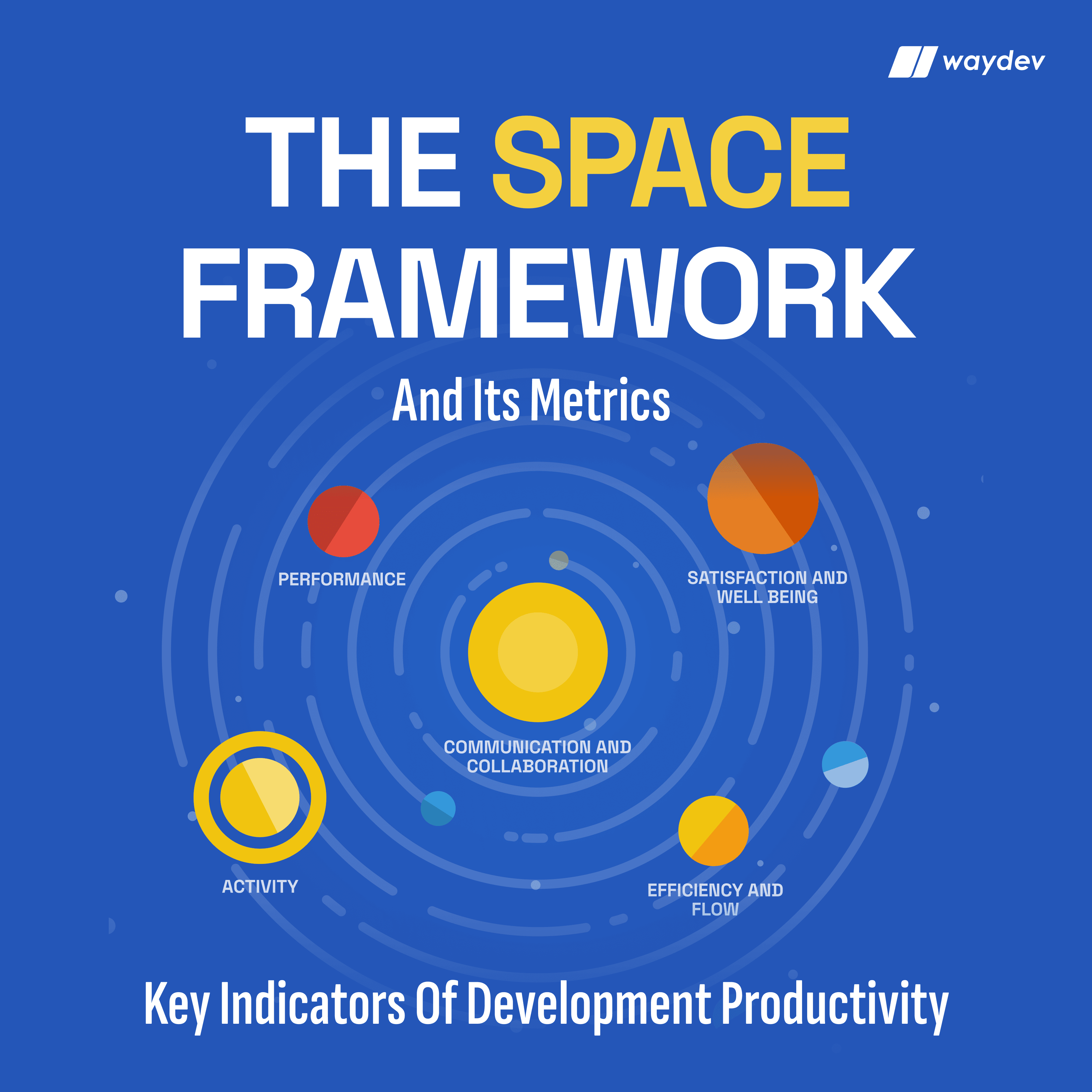
All of it sits under the WAY Framework, which combines DORA, SPACE and Core 4 rather than replacing them with a proprietary index, so your measurement vocabulary stays yours if you leave. Waydev runs cloud, self-hosted or fully on-premise, and is built to scale past 10,000 active contributors, in production at American Express, Dropbox and PwC.
| Plan | Price | Included |
|---|---|---|
| Pro | From $348 per year per active contributor | Delivery and Health reports, Targets, Notifications, role-based access control, custom dashboards. Up to 50 repositories and 6 months of history. |
| Premium | From $648 per year per active contributor | Delivery, Health, Planning, Automation, Studio and AI modules. Team-level permissions, SSO and SAML, API access. Up to 300 repositories and 36 months of history. |
| Enterprise | Custom | Everything in Premium plus on-premise Git and ticketing integrations, self-hosted or cloud-hosted, SAML SSO, dedicated engineering support and customer success. |
Unlimited users and unlimited teams on every plan. See the pricing page. Typo publishes tiered self-serve pricing including a free plan; compare current numbers directly on their site.
To start with Waydev, schedule a demo. During the proof of concept, we connect your version control and issue tracking systems, real-time integration with GitHub, GitLab, Bitbucket, Azure DevOps, Jira, Azure Boards and others, and backfill your history so you have trend data from day one rather than waiting a quarter to accumulate it.
How does Waydev compare to Typo?
Both cover DORA metrics and developer experience well. Typo goes further into automated code review that acts on your pull requests. Waydev goes further into cost capitalization, resource planning and a portable measurement framework. Neither is a strict superset of the other.
Does Waydev do automated code review?
No. We report on review speed and thoroughness through Merge Quality, but we do not review or auto-fix code. If automated review is your primary requirement, evaluate Typo or a dedicated code review tool alongside us.
Does Waydev offer a free trial?
We do not have a self-serve free tier. We run proof of concept engagements on your own repositories with your history backfilled, which is a closer look than a trial on a demo tenant.
Can Waydev run on-premise?
Yes, on the Enterprise plan, including on-premise Git and ticketing integrations and SAML single sign-on. Details on the security page.
See it on your own data
We will connect your systems and backfill your history so you can see your own delivery, cost and AI numbers before committing. You keep the analysis either way.
More comparisons: Jellyfish · LinearB · DX · Swarmia · Allstacks · Hatica · Comparison hub
Further reading: The WAY Framework · DORA metrics · The wider engineering intelligence landscape · Pricing
Ready to unlock your SDLC productivity?