




Engineering intelligence guide · Updated November 2026
AI-Native SDLC: How to Measure AI-Assisted Software Delivery
AI coding assistants and autonomous agents are changing how software is planned, built, reviewed and deployed. A modern engineering measurement system must track more than prompts, accepted suggestions or lines generated: it must connect AI activity to delivered outcomes, review effort, quality, reliability and cost.
Use this guide to design an AI-native software development lifecycle (SDLC) measurement program that executives, engineering leaders, developers and finance teams can trust.
What is an AI-native SDLC?
An AI-native SDLC is a software development process in which AI assistants and agents contribute to one or more lifecycle stages: requirements, design, implementation, testing, code review, release and maintenance. Humans retain responsibility for acceptance criteria, security, production decisions and organizational outcomes.
It is not the same as installing an AI coding extension. A team may have high tool adoption while experiencing slower reviews, more rework or unchanged delivery throughput. AI-native measurement therefore joins tool-level data to software engineering outcomes.
Where AI appears in the development lifecycle
| Stage | AI-assisted activity | Questions to answer |
|---|---|---|
| Plan | Issue drafting, scoping, estimations | Did requirements quality and predictability improve? |
| Build | Autocomplete, agent-generated changes, tests | How much work was assisted, reviewed and accepted? |
| Review | PR creation, review assistance, fixes | Did time to first review or review rounds change? |
| Release | CI fixes and deployment preparation | Did change lead time and deployment throughput improve? |
| Operate | Debugging, incident response, maintenance | Are reliability, recovery and rework improving? |
Track the complete measurement chain, not isolated AI events
For every measurable unit of work, link AI tool event → task or issue → commit or pull request → review and CI → merge → deployment → subsequent quality signal. This is a logical measurement chain, not a promise that every integration provides complete provenance.
- Identity: map AI tool identities, developers, service accounts and agent accounts carefully.
- Work: link work items to repositories, branches and PRs using your established conventions.
- Time: preserve timestamps, time zones and comparable observation windows.
- Outcomes: connect merges and deployments where integrations and identifiers permit.
- Confidence: label incomplete links as unknown; do not silently classify them as human-only work.
For agent-specific identity limitations, read our guide to measuring AI coding agents. For quality checks, see measuring AI-generated code quality.
A six-layer AI engineering measurement framework
1. Adoption and engagement
Track eligible seats, active users, weekly usage, frequency and tool mix. Segment by team and role where privacy policies permit. Seats purchased are a procurement measure, not evidence of impact.
2. AI contribution and attribution
Separate agent-initiated artifacts, AI-assisted artifacts and items with unknown attribution. A bot opening a PR does not prove that every changed line was created by an agent. A human opening a PR does not prove there was no AI assistance.
3. Delivery flow
Measure PR throughput, PR cycle time, time in review, merge rate, deployment frequency and change lead time. Examine distributions and team-level trends rather than using a single average.
4. Quality and reliability
Look at review rounds, corrective changes, reverts, CI failures and incident-linked outcomes. Code survival alone is not proof of correctness. Evaluate work type and codebase differences.
5. Economics and allocation
Combine license costs and available token or agent spend with delivery outcomes. Consider training time, reviewer hours and operating overhead in cost analyses. Cost per merged PR is useful for trends but does not represent business value on its own.
6. Developer experience and governance
Use developer feedback and friction signals alongside telemetry. Establish appropriate access controls, data retention and Works Council or employee-privacy rules. Engineering intelligence helps observe behavior; enforcement requires separate administrative and security controls.
AI SDLC metrics and calculation examples
| Metric | Example definition | Common pitfall |
|---|---|---|
| Weekly AI adoption | Weekly active tool users ÷ eligible engineers × 100 | Comparing users against all employees rather than eligible engineers |
| Agent PR merge rate | Merged agent-initiated PRs ÷ eligible agent-initiated PRs × 100 | Ignoring observation windows and open PRs |
| PR cycle time | Elapsed time from defined PR start event to merge | Mixing incompatible start events across teams |
| Review burden | Review rounds or reviewer hours per comparable PR cohort | Failing to control for PR size and complexity |
| AI tool cost per merged PR | Allocated AI spend ÷ qualifying merged PRs in a defined period | Calling this ROI without quantifying benefits |
| Deployment outcome | Changes deployed, change lead time and reliability measures | Equating a merged PR with shipped customer value |
Illustrative example: A team has 80 eligible engineers and 48 distinct weekly AI tool users. Weekly adoption is 60%. If reviewers spend 20% longer on comparable AI-assisted changes, that is a signal to investigate workflow and quality, not proof that AI reduced productivity. Review the cohort, instrumentation and measurement window.
Why DORA, SPACE and DX belong together
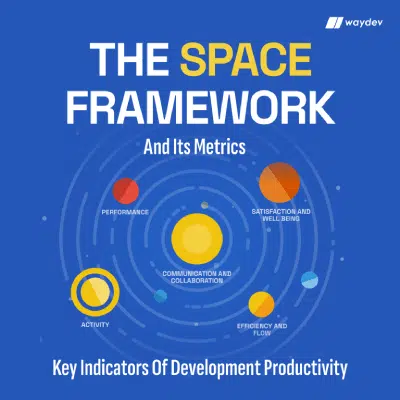
DORA provides delivery and operational performance perspectives, while SPACE and developer-experience research address additional dimensions such as satisfaction, collaboration and work patterns. Combining them reduces the risk of optimizing commits or PR counts at the expense of maintainability and developer well-being. The 2025 DORA research describes AI as an amplifier of existing organizational strengths and weaknesses.
A 90-day AI SDLC measurement rollout
- Days 1–30: Establish the baseline. Inventory AI vendors, eligible seats, repositories, issue trackers, CI/CD events and cost sources. Document data coverage, define metrics and set privacy rules.
- Days 31–60: Connect signals. Map tool identities and artifact events, build adoption and delivery dashboards, examine attribution coverage and introduce quality checks.
- Days 61–90: Evaluate interventions. Compare similar teams or work streams with consistent windows. Investigate review, quality and cost trade-offs, and agree on decisions for licenses, enablement and workflow design.
Start with one business question per dashboard, such as “Did higher agent usage reduce time to production without increasing corrective rework?” Use Waydev dashboards to organize views by stakeholder.
How Waydev supports AI-native engineering intelligence
Waydev combines AI tool adoption and impact reporting with engineering delivery, quality and cost context. AI Adoption measures tool usage and engagement. AI Impact focuses on the path from AI-assisted coding events to reviews and delivery checkpoints. Dashboard capabilities support role-specific views, and Waydev Brain adds natural-language access to engineering analytics in supported deployments.
Actual vendor support, identity mapping and metric coverage depend on your connected tools and configuration. Verify these requirements during evaluation instead of assuming that all AI coding tools emit equivalent telemetry.
Frequently asked questions about AI-native SDLC
What is the difference between AI adoption and AI impact?
Adoption measures whether and how teams use AI tools. Impact examines changes in delivery, quality, cost and other outcomes. High adoption does not guarantee positive impact.
Can I measure the contribution of autonomous coding agents?
Yes, when reliable agent identities and events are available. Distinguish agent-initiated changes from AI-assisted human changes and preserve an unknown category for incomplete telemetry.
Which metrics should engineering leaders start with?
Begin with weekly active usage, attribution coverage, PR flow, review burden, deployment performance, rework and AI spend. Add team feedback and business outcomes as measurement matures.
Does AI-generated code improve developer productivity?
It can, but results depend on the workflow, codebase and organizational system. Evaluate whether teams deliver valuable, reliable changes with less total effort rather than assuming more generated code means more productivity.
How do I calculate AI coding ROI?
Compare the value of credible delivery or labor-efficiency gains with the full cost of licenses, tokens, agents, enablement and additional review or rework. Treat the calculation as a scenario estimate unless supported by robust comparisons.
Explore further: AI Adoption · AI Impact · Dashboards documentation · Waydev Brain.
See AI engineering intelligence in your own environment
Bring your AI coding-tool telemetry together with pull requests, tickets and deployment signals. Discuss integration coverage, engineering outcomes, privacy requirements and an evaluation plan with the Waydev team.