If you’re building software, you’re building it with people. Understanding what your engineering team needs, what slows them down, and what motivates them isn’t guesswork. It’s a conversation, and the best way to have that conversation at scale is a developer experience survey.
You can’t improve what you don’t understand. Developer surveys help you cut through assumptions and actually hear what your team is experiencing every day.
Alex Circei, CEO of WaydevBelow are 20 practical questions, grouped by focus area, to include in your next developer experience survey, along with the practices that decide whether people actually answer them honestly.
A good developer experience survey covers more than satisfaction. It digs into alignment, collaboration, culture, customer empathy, and how work actually gets done. Five areas are worth covering every time.
Do engineers know why they’re building what they’re building? Are company goals reaching them beyond the all-hands meeting?
How well do engineers work with each other, and with product, design and QA?
Are people speaking up? Do they feel valued, included, and trusted?
Do developers understand the impact of their work on customers? Are they getting enough visibility into feedback?
Is the work sustainable? Do people have the tools and clarity they need to succeed?
Organized by focus area. These are the kind that lead to insight rather than a checkbox answer.
| Focus area | Question |
|---|---|
| Alignment | Do you feel motivated by our mission and objectives? |
| Alignment | Are your team’s priorities clearly communicated? |
| Alignment | Do you understand how your work contributes to company success? |
| Alignment | How often are you updated on changing business goals? |
| Collaboration | Do you feel supported by your teammates when working on projects? |
| Collaboration | How would you rate collaboration between engineering and other teams? |
| Collaboration | Are you comfortable asking for help or sharing feedback? |
| Collaboration | What makes collaboration harder than it needs to be? |
| Culture and safety | Do you feel comfortable speaking up or sharing concerns with your team or manager? |
| Culture and safety | Would you say leadership is open and inclusive in how they work? |
| Culture and safety | Do you feel your contributions are seen and valued? |
| Culture and safety | How clearly and consistently does leadership communicate important updates? |
| User needs | How often do you get feedback from users about your work? |
| User needs | Do you feel you have enough time to factor in user needs? |
| User needs | What obstacles do you face translating user feedback into code? |
| User needs | Are the tools we use for collecting user insights effective? |
| Workload | How do you currently prioritize your tasks? |
| Workload | Are deadlines usually realistic and achievable? |
| Workload | Do you have the resources and tools you need to work efficiently? |
| Workload | What changes could reduce daily workflow friction? |
Scroll the table sideways on a small screen.
These kinds of questions open up honest conversations. You don’t need a fifty question form, just the right prompts to make developers feel heard.
Alex Circei, CEO of WaydevA Google Form once a year doesn’t cut it. Four things separate a survey people answer honestly from one they click through to make it stop.
A survey nobody hears back from teaches your team to stop answering honestly. That lesson only has to be taught once.
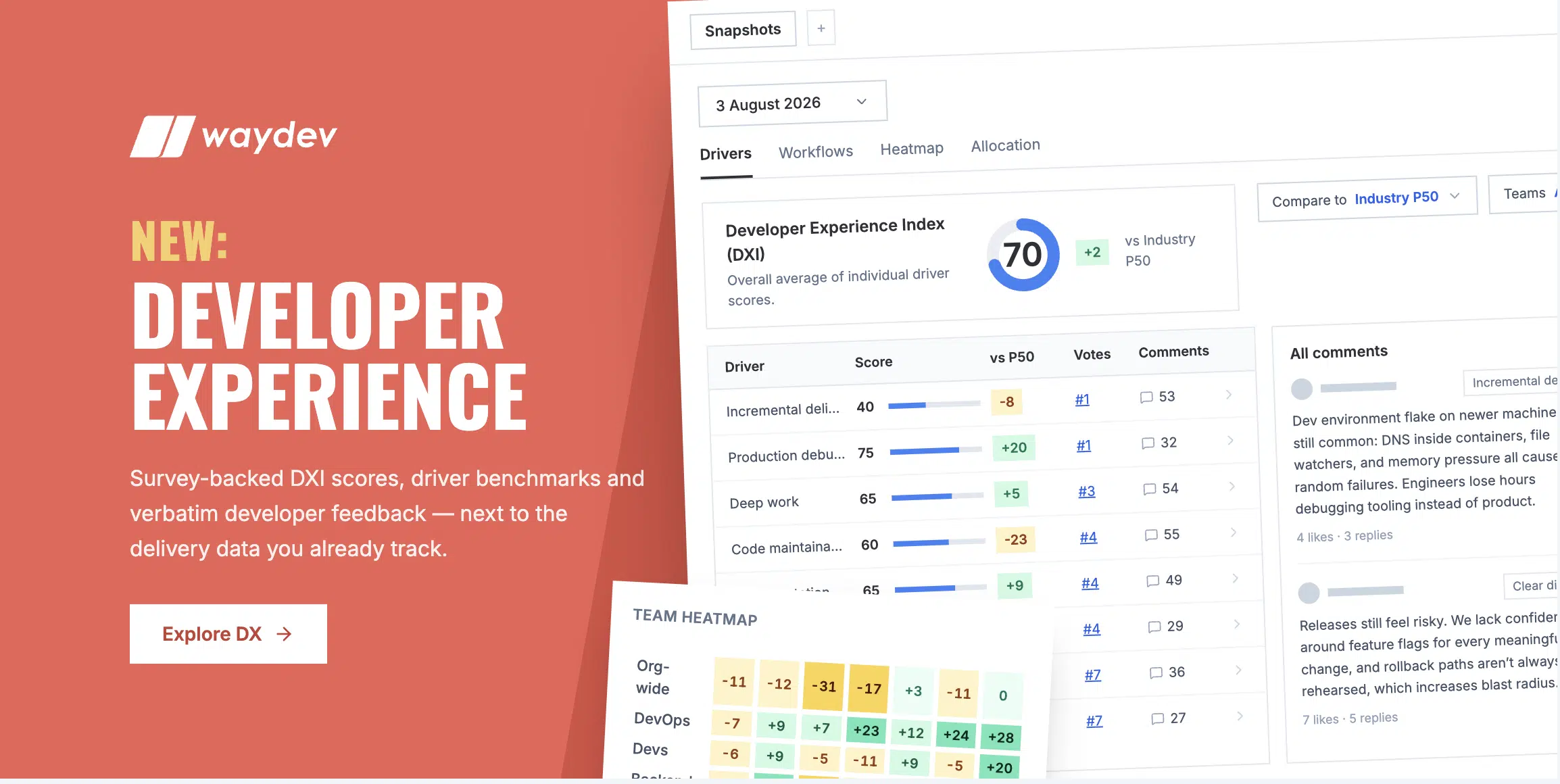
Waydev’s developer experience surveys now run through Snapshots, launched in August 2026. It takes the kind of questions above and gives them a place to land: scored, benchmarked, and tracked over time rather than collected once and forgotten in a spreadsheet.
At Waydev, we built our developer experience tools because we couldn’t find a fast, lightweight way to measure developer experience in real time. So we made one.
Alex Circei, CEO of WaydevWith that data, engineering leaders can spot friction early, support their teams with evidence instead of guesswork, and improve velocity without burning people out to get there. If you want the full breakdown of how drivers, workflows and benchmarks fit together, see the Snapshots launch post, or the Waydev Core 4 framework it sits alongside.
Behind every successful product is a team of developers, and behind every great developer is a manager who listens. Asking smart, relevant questions surfaces what matters most: how your team feels, where they’re getting stuck, and what they need to thrive. When developers thrive, so does the company.
Snapshots scores, benchmarks and tracks the questions above automatically, so the next survey builds on the last one instead of starting over.
Schedule a DemoSee Snapshots alongside your existing delivery data.
Ready to unlock your SDLC productivity?